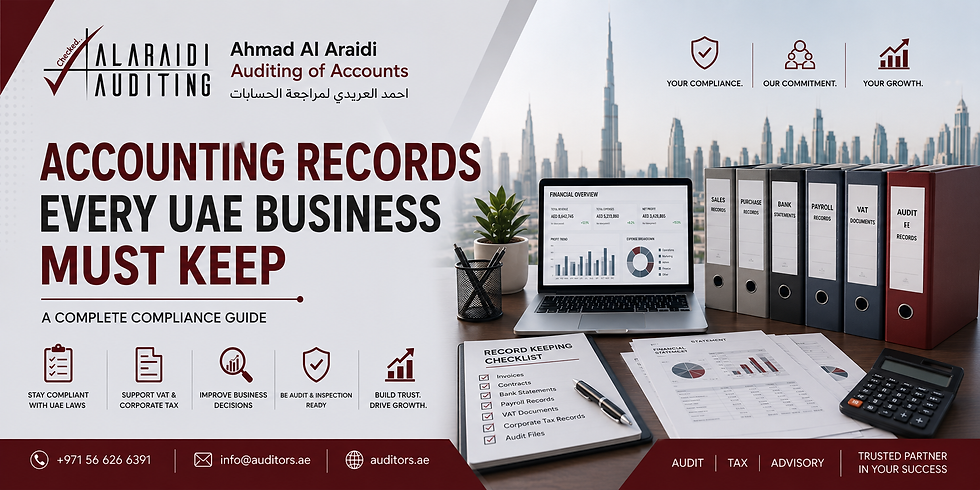
What Investors Want to See Before Investing in Your Business

What Investors Want to See Before Investing in Your Business
Securing investment is one of the most significant milestones for any business. Whether you are looking for angel investors, venture capital, private equity, or strategic business partners, one thing remains the same: investors do not invest in ideas alone—they invest in well-managed businesses with strong growth potential.
Many entrepreneurs spend months perfecting their pitch deck but overlook the financial and operational aspects that investors carefully evaluate during due diligence.
If your financial records are incomplete, your cash flow is inconsistent, or your business lacks a clear growth strategy, attracting investment becomes much more difficult.
In this "What Investors Want to See Before Investing in Your Business" guide, we'll explore the key factors investors look for before committing their money and how you can prepare your business to stand out.
Why Investors Conduct Due Diligence
Investing always involves risk. Before committing capital, investors want to reduce uncertainty by understanding how your business operates and whether it can generate sustainable returns.
Their objective is to answer three key questions:
Is the business financially healthy?
Can it grow sustainably?
Can management be trusted with our investment?
A well-prepared business inspires confidence and significantly increases the chances of securing funding.
1. Accurate Financial Statements
One of the first documents investors request is your financial statements.
They typically review:
Profit & Loss Statement
Balance Sheet
Cash Flow Statement
These reports provide a snapshot of your company's financial health.
Investors Want to Know:
Is the business profitable?
Is revenue growing consistently?
Are expenses under control?
Is the company financially stable?
If financial statements are incomplete or inaccurate, investor confidence decreases immediately.
2. Consistent Revenue Growth
Revenue growth demonstrates that customers value your products or services.
However, investors also analyze:
Revenue trends over several years
Customer retention
Recurring income
Seasonal fluctuations
Revenue diversification
Consistent and sustainable growth is more attractive than rapid but unpredictable expansion.
3. Healthy Cash Flow
Many businesses show accounting profits while struggling with cash flow.
Investors closely examine:
Operating cash flow
Collection periods
Supplier payment cycles
Cash reserves
Working capital
Strong cash flow indicates that the business can support future growth without constantly requiring additional financing.
4. Strong Profit Margins
Revenue alone does not determine business quality.
Investors compare:
Gross Profit Margin
How efficiently products or services are delivered.
Operating Margin
How effectively expenses are controlled.
Net Profit Margin
The actual return generated from operations.
Improving profitability often increases business value more than simply increasing sales.
5. Reliable Financial Records
One of the biggest warning signs for investors is poor bookkeeping.
Businesses should maintain:
Organized accounting records
Bank reconciliations
Tax records
Supporting invoices
Contracts
Payroll records
Well-maintained financial records demonstrate professionalism and reduce due diligence concerns.
6. Compliance with UAE Regulations
Investors prefer businesses that operate in full compliance with UAE regulations.
This includes:
Trade license compliance
VAT registration (where applicable)
Corporate Tax registration
Timely tax filings
Proper accounting records
Annual audits (when required)
Regulatory compliance reduces legal and financial risks.
7. A Clear Business Model
Investors want to understand:
How the business makes money
Why customers choose your services
What differentiates you from competitors
Whether the business model is scalable
A simple, well-defined business model is often more attractive than a complex one.
8. Scalable Growth Strategy
Investors look beyond current performance.
They want to know:
Can the business expand?
Are new markets available?
Can operations grow without proportionally increasing costs?
Is the business dependent on one customer or one founder?
Scalability is a major factor in investment decisions.
9. Strong Management Team
Many investors say they invest in people before products.
They evaluate:
Leadership experience
Industry knowledge
Decision-making ability
Financial discipline
Long-term vision
A capable management team often increases investor confidence even if the business is still growing.
10. Business Risks and Risk Management
Every business has risks.
Investors appreciate companies that identify and actively manage them.
Examples include:
Customer concentration
Supplier dependency
Cash flow risks
Regulatory risks
Operational risks
Cybersecurity risks
Acknowledging risks—and having a plan to mitigate them—builds trust.
Common Reasons Investors Walk Away
Even promising businesses lose investment opportunities due to avoidable issues.
Some of the most common include:
Poor Financial Records
Incomplete bookkeeping raises immediate concerns.
No Financial Reporting
Investors need reliable data, not estimates.
Weak Cash Flow
Cash shortages create operational risk.
Lack of Transparency
Investors value honesty and clear communication.
Unrealistic Business Valuation
Overvaluing the business without supporting evidence often discourages investors.
How to Prepare Before Meeting Investors
Before presenting your business, make sure you have:
Updated financial statements
Monthly management reports
Cash flow forecasts
Business plan
Growth strategy
Customer performance analysis
Tax compliance records
Company valuation (if available)
Preparation demonstrates professionalism and significantly improves credibility.
The Role of Professional Accountants
Professional accountants do far more than prepare tax returns.
They help businesses:
Maintain accurate bookkeeping
Prepare financial statements
Improve reporting quality
Forecast cash flow
Support investor due diligence
Strengthen financial controls
For businesses seeking investment, professional financial support can make a significant difference.
How Ahmad Al Araidi Auditing of Accounts Can Help
At Ahmad Al Araidi Auditing of Accounts, we help businesses become investment-ready through professional financial and advisory services.
Our services include:
Bookkeeping and accounting
Financial statement preparation
Business performance reporting
Cash flow analysis
Corporate Tax compliance
VAT compliance
External audit
Financial health assessments
Investor-ready financial reporting
We help business owners present accurate, transparent, and reliable financial information that builds investor confidence.
Conclusion
Investors are not simply buying into an idea—they are investing in a business with the potential to grow and generate returns.
Businesses that maintain accurate financial records, manage cash flow effectively, comply with regulations, and demonstrate a clear growth strategy are far more likely to attract investment.
By preparing your business before approaching investors, you not only improve your chances of securing funding but also strengthen the overall financial health of your company.
Investment starts with confidence—and confidence starts with reliable financial information.
Frequently Asked Questions (FAQ)
What is the first thing investors review?
Most investors begin by reviewing financial statements and assessing the overall financial health of the business.
Are financial statements necessary for small businesses?
Yes. Even small businesses should maintain accurate financial statements if they plan to seek investment.
Why is cash flow important to investors?
Healthy cash flow shows that the business can fund operations and support future growth.
Do investors review tax compliance?
Yes. Compliance with VAT, Corporate Tax, and other regulatory obligations is an important part of due diligence.
Can professional accountants help attract investors?
Absolutely. Accurate financial reporting and organized records increase investor confidence and improve the due diligence process.